
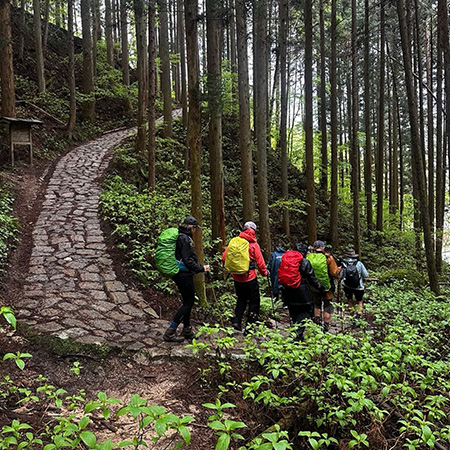
Guided vs self-guided walking tours in Japan
When considering guided vs self-guided walking tours in Japan, both approaches can provide a deeply rewarding way to experience the Kumano Kodo or Nakasendo. The right choice depends on how much independence you prefer, how comfortable you are managing navigation and logistics in regional Japan, and how much you value cultural insight, personal support and shared experiences.
This guide explains what each option typically involves and what a small group tour with Kumano Camino adds, helping you choose the approach that best suits you.
Guided or self-guided: what is the difference?
The Kumano Kodo and Nakasendo can both be walked independently. Self-guided tour providers can arrange accommodation and luggage transfers, provide detailed walking notes and, in some cases, offer an app to assist with navigation. This can suit confident independent travellers who value flexibility and are comfortable making daily decisions along the way.
On a guided walking tour, guides accompany the group throughout the journey. They manage day-to-day logistics, provide historical and cultural context, communicate with local people and offer immediate assistance when circumstances change.
The difference is therefore not simply whether you can follow the trail yourself. It is how much planning, support, cultural understanding and personal connection you want included in the experience.
What a self-guided tour typically includes
Self-guided packages vary between providers, but they generally arrange the essential elements of the journey while leaving you responsible for completing each day independently.
- Accommodation and luggage transfers
Accommodation is usually booked in advance, with luggage transferred between selected inns while you walk with a day pack. - Route information
You may receive detailed walking notes, maps and access to a navigation app. You remain responsible for following the route and confirming that you are on the correct trail. - Independent daily travel
Depending on the self-guided tour you choose – and within the constraints of where you need to be each day – you decide when to begin walking, the pace at which you travel and when to stop. The level of flexibility varies between self-guided tours. Some operators reserve multiple rooms on set dates and sell them separately. As a result, you may effectively walk alongside a group, but without a guide. - Managing transport and changes
You are generally responsible for finding bus stops, following transport instructions and adapting when weather, trail closures or timetable changes affect the planned route. - Remote assistance
Most providers supply a contact number if a problem arises. The type of assistance available and how quickly it can be provided will vary between companies. - Communicating along the way
You communicate directly with innkeepers, transport providers, shopkeepers and others you meet. Translation tools can be helpful, although communication may sometimes remain challenging.
Guided and self-guided compared
| Consideration | Self-guided | Guided |
|---|---|---|
| Cost | Usually less expensive because guide services and in-person support are not included. | Usually more expensive, reflecting the guides, planning, cultural interpretation and support included throughout the journey. |
| Dates and flexibility | May provide greater flexibility when choosing travel dates, duration and companions. | Operates on scheduled departure dates and follows a carefully planned group itinerary. |
| Navigation and daily logistics | You follow the route notes or navigation app and manage transport connections, timing and any changes yourself. | The guides manage navigation, transport arrangements and day-to-day logistics throughout the tour. |
| Support when something changes | Assistance is usually provided remotely through a contact number, with the level of support varying between providers. | A guide is present to respond immediately if someone becomes unwell, luggage is delayed, conditions change or another problem arises. |
| Language and cultural understanding | You rely on your own research, written information and translation tools when communicating or interpreting places along the trail. | Japanese-speaking guides explain the history and culture of the places you visit and help facilitate conversations with local people. |
| Pace and company | You walk alone or with your chosen companions and have complete control over your daily pace. | You travel with a small group, sharing the experience while still having opportunities for personal time. Two guides can help accommodate different walking paces. |
| Food, accommodation and local connections | Accommodation and some meals may be pre-arranged, with the experience depending on the itinerary and provider selected. | Accommodation and dining are carefully chosen as part of the experience, supported by the guides’ knowledge and established local relationships. |
What travelling with Kumano Camino adds
Guided tours vary considerably. The following features are part of the experience Alison and Carolyn have developed for every Kumano Camino small group tour.
Two guides on every tour
Alison and Carolyn both travel from Australia to lead every tour. Having two guides helps them support different walking paces, answer questions as they arise and provide each guest with more individual attention.
A pre-tour information session
Before departure, the group meets either in person or online. Alison and Carolyn explain what to expect, discuss the packing list and answer questions. It is also an opportunity for guests to meet their fellow walkers before the journey begins.
Japanese-language support
Both guides speak Japanese. This assists with practical communication and enables more meaningful conversations with innkeepers, farmers, shopkeepers and other people encountered along the way.
Long-standing local relationships
Alison and Carolyn have been walking these routes since 2015 and return to many of the same inns, restaurants, shops and communities. Their established relationships help guests experience a warmer and more personal connection with regional Japan.
Cultural and historical context
Having walked these trails many times, Carolyn and Alison have developed extensive knowledge through experience and curiosity. Guests learn not only where they are walking, but why the places along the route are significant. Sometimes, seemingly insignificant details and stories encountered along the way contribute more to an understanding of the trail than the bare facts contained in trip notes.
Practical help when plans change
If someone becomes unwell, luggage is delayed, a dietary issue arises or conditions require a change of plan, Carolyn and Alison are both there to assist. Their experience, local connections and Japanese-language ability help them resolve problems quickly and calmly. Having two guides means one can attend to the issue while the other continues looking after the group.
A relaxed small group
Carolyn and Alison’s long friendship creates an easy and welcoming atmosphere. Guests can enjoy the company of the group while still finding opportunities for quiet time and walking at their own rhythm. Many guests say that travelling with Carolyn and Alison feels less like a conventional group tour and more like going away with good friends. Read their experiences in our testimonials.
Food and culture as part of the journey
These tours are designed as cultural experiences as much as walking holidays. Carolyn and Alison take considerable care in selecting traditional accommodation and regional meals, making where guests eat and stay an important part of the journey. As both the owners and guides, they can prioritise the quality of the experience over profit – choosing places where they would genuinely want to stay and eat themselves, rather than cheaper alternatives.
Which option is right for you?
There is no single right way to experience the Kumano Kodo or Nakasendo. The best choice depends on your travel style, priorities and the type of experience you want from your time in Japan.
A self-guided tour may suit you if:
- value independence and flexibility
- prefer to walk alone or with companions of your choosing
- are comfortable navigating and relying on your own research
- want to travel on a lower budget
A guided tour may suit you if:
- want to make the most of your time in Japan
- prefer someone else to manage the planning and logistics
- value cultural context, local insight and Japanese-language support
- appreciate help when plans change
- enjoy the camaraderie of travelling with a small group
For travellers seeking more than simply walking the trail – including cultural insight, local connections and the reassurance of experienced Japanese-speaking guides – a Kumano Camino small group tour offers a richer, more supported journey. It combines expert guidance with the camaraderie of a small group and the feeling of exploring Japan with friends.
Considering a guided tour? Explore our frequently asked questions about travelling with Kumano Camino.
Guided walking tour testimonials
Explore our guided walking tours in Japan
Choose between the sacred pilgrimage landscapes of Kumano and Koyasan or the preserved post towns and mountain scenery of the Nakasendo and Kiso Valley.
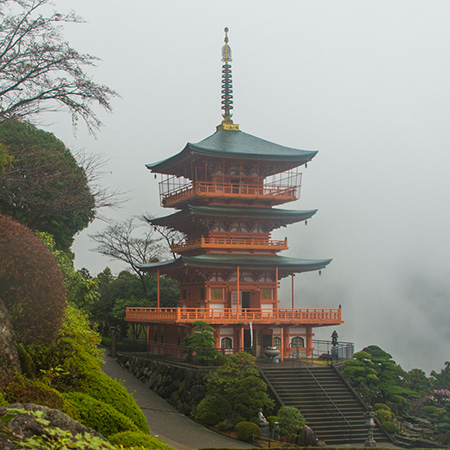
Guided Kumano Kodo Walking Tour
Walk approximately 70 km along the Nakahechi pilgrimage route and experience the sacred mountain community of Koyasan.
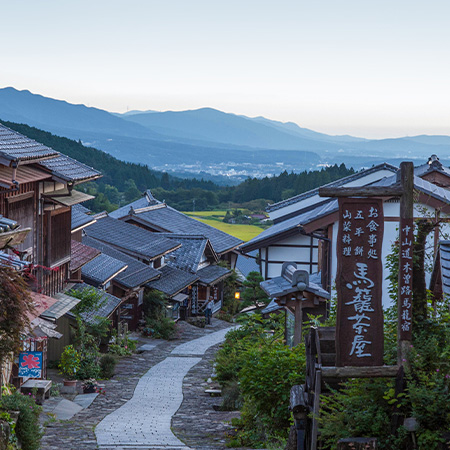
Guided Nakasendo Walking Tour
Follow the historic Nakasendo through preserved post towns, forest trails and the mountain landscapes of the Kiso Valley.