The Kiso Valley in Japan
A mountain region shaped by nature and history
Deep in the mountains of central Japan, the Kiso Valley is a landscape of forested slopes, clear rivers, historic post towns and communities shaped by centuries of travel.
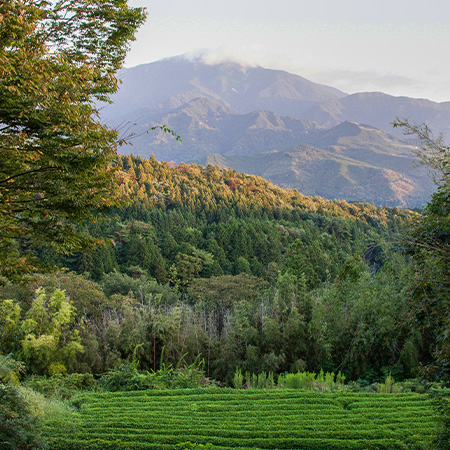
Located primarily in southern Nagano Prefecture, the valley lies between the Central Alps and sacred Mount Ontake. The Kiso River passes through its steep terrain, connecting mountain villages, forests and settlements that developed along one of Japan’s most important historic routes.
Although the Kiso Valley is best known for its preserved post towns, it is far more than a historical corridor. Its forests, spiritual traditions, craftsmanship and regional food all reflect the close relationship between the local people and their environment.
The Kiso Valley and the Nakasendo
The history of the Kiso Valley is inseparable from the Nakasendo Trail. During the Edo period, this inland highway connected Edo, now Tokyo, with Kyoto through the mountains of central Japan.
The section passing through the valley was known as the Kisoji, or Kiso Road. Eleven post towns stood along this mountain route, providing accommodation, food, horses and porters for officials, merchants, pilgrims and other travellers.
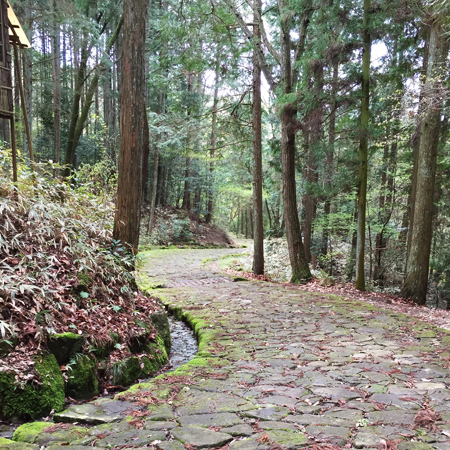
Sections of the original trail remain between beautifully preserved post towns. Walking these paths offers a rare opportunity to experience the landscape at a pace similar to those who travelled through the valley centuries ago.
Historic post towns of the Kiso Valley
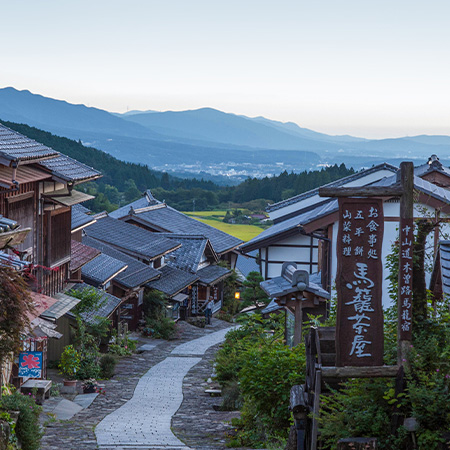
Magome and Tsumago are connected by one of the best-known surviving sections of the Nakasendo. Their traditional wooden buildings, stone-paved streets and surrounding forests provide a vivid impression of life along the old highway.
Further north, Narai became one of the route’s most prosperous post towns and was known as Narai of a Thousand Houses. Its long streetscape retains many historic buildings that now serve as homes, inns, shops and restaurants.
Kiso-Fukushima developed as the political and economic centre of the valley. Its important checkpoint controlled the movement of travellers, weapons and goods along the Nakasendo.
Forests and the Five Trees of Kiso
Forests have shaped the landscape, economy and culture of the Kiso Valley for centuries. Kiso hinoki cypress became highly valued for the construction of castles, temples and shrines, while local timber also supported generations of craftspeople.
Heavy logging eventually depleted the forests, leading the Owari domain to protect five valuable species known as the Five Trees of Kiso. These included hinoki, sawara, asunaro, koyamaki and nezuko.
Today, the Akasawa Recreation Forest near Agematsu protects groves of Kiso hinoki that are more than 300 years old. The forest is also recognised as the birthplace of shinrin-yoku, commonly known as forest bathing, and offers walking trails through ancient trees and beside clear mountain streams.
Mount Ontake and a sacred landscape
Rising to 3,067 metres west of the valley, Mount Ontake has been a place of mountain worship for centuries. Pilgrims travelled to the mountain to pray, undergo purification and visit its shrines, waterfalls and sacred sites.
Villages at the foot of Mount Ontake developed close connections with these religious traditions. White-clad pilgrims can still be seen on the mountain, continuing practices that have been passed down through generations.
The presence of Mount Ontake gives the Kiso Valley a spiritual dimension that extends beyond its post towns and walking trails. Nature, belief and community remain closely connected throughout the region.
Crafts, food and everyday life in the valley
The natural resources of the Kiso Valley continue to influence its traditional crafts. Local artisans work with hinoki cypress and other timbers, while Kiso lacquerware has been produced in the region for approximately 600 years.
Regional food also reflects the mountain environment. Local specialities include soba noodles, seasonal mountain vegetables and gohei mochi, a grilled rice cake coated in a savoury-sweet sauce. These dishes are often served in family-run restaurants, traditional inns and small post-town shops.
Staying in the valley provides an opportunity to experience another side of regional Japan. Historic buildings remain part of everyday life, local food follows the seasons and long-standing traditions continue within living communities.
The Kiso Valley through the seasons
Each season brings a different character to the valley. Spring introduces fresh green foliage and mountain flowers, while summer fills the forests with deep colour and flowing streams.
Autumn transforms the hillsides into shades of red, gold and green and is a particularly beautiful time to walk. During winter, snow settles across the mountains and post towns, revealing a quieter and more contemplative landscape.
Walk through the Kiso Valley with Kumano Camino
Walking through the Kiso Valley brings together its mountain landscapes, post-town history and living traditions. Join experienced Australian Japan specialists on our small-group guided Nakasendo walking tour and discover the region with cultural insight, local knowledge and personal support.